The most important change was not a number on a scale. It was freedom. Tirzepatide reduced the background pressure of food—the cravings, the negotiation and the sense that eating had to do emotional work as well as provide energy. I still enjoy food. It simply stopped demanding so much of my attention.
I also came to think that something more fundamental had changed. My use of the word “reset” described a metabolic pattern: the possibility of better blood-glucose control, a stronger response to insulin, greater use of lipid as fuel and less fat stored in places where it disrupts normal physiology. Appetite matters because it helps drive those changes, but it is not the whole argument. The question is whether the human evidence supports that self-reinforcing state—and how much of it depends on continuing treatment.
Watch the evidence-led video
Does tirzepatide reset metabolism?
A ten-minute visual explanation of the glucose, insulin, lipid and appetite mechanisms, including the strongest evidence for the argument and the limits that keep it honest.
10 minutes · English captions · Watch on YouTube
What changed for me
The effect spread well beyond portion size
Cravings became quiet
Food stopped operating as a constant reward, distraction and source of emotional support.
Energy became even
I felt energetic from morning to evening, with fewer dips and much less need for caffeine.
My gut became calmer
My irritable-bowel symptoms reduced dramatically, which was one of the biggest surprises.
I became more capable
My strength and cardio improved, and I added wrestling and boxing several times each week.
Food stopped being an emotional support system
That is a large claim, so I want to be precise about it. Tirzepatide did not supply discipline that I had somehow failed to manufacture. It changed how much discipline ordinary eating seemed to require. I could recognise hunger, decide what to eat and then get on with something else. The mental space that opened up was at least as important as the reduction in food itself.
My intake changed across many ordinary decisions, including fewer calories from drinks with meals, sometimes including beer. That was one small part of the wider pattern, not the central story. The central story was that I no longer felt pushed towards food whenever I was tired, stressed, bored or simply looking for a quick reward.
There is a mechanistic case for why the pressure changed. Tirzepatide affects a gut–brain system that integrates nutrient arrival, fullness, hypothalamic energy regulation and the motivational value of food. Slower early gastric emptying can make a meal feel more substantial, while central signalling can reduce hunger and the salience of food cues. If food produces less anticipatory pull, an old emotional habit has less biological force behind it. The medicine has not erased the learned association; it has changed the conditions in which that association competes for attention.
A 2025 randomised trial gives that argument a human foothold. At week three, adults assigned to tirzepatide ate an estimated 525 kilocalories less than the placebo group at an unrestricted test lunch. They reported less hunger, craving, overeating and reactivity to food in the environment, without evidence that they were simply imposing more conscious dietary restraint. The aggregate brain-imaging comparison for highly palatable images was not significant. In an exploratory category-specific analysis, activation to high-fat and high-sugar images was lower in several reward- and memory-related regions.
This does not prove that tirzepatide treats emotional eating as a psychological condition. Smaller meals, nausea, expectation and the reinforcement of seeing weight fall could all contribute. My narrower argument is that a measurable reduction in hunger and cue reactivity can make food less available as an automatic emotional response. That is more than telling somebody to exercise willpower.
Two receptors can change the pressure behind a decision
Tirzepatide is a modified peptide that activates receptors for two incretin hormones: glucose-dependent insulinotropic polypeptide (GIP) and glucagon-like peptide-1 (GLP-1). Our intestines normally release incretins after nutrients arrive. Their signals help coordinate an incoming meal with pancreatic hormone release, gastrointestinal movement and appetite regulation.
This is why “it makes you eat less” is true but incomplete. Eating behaviour is the visible outcome of signals moving between the gut, pancreas, brain and other tissues. Tirzepatide does not abolish choice; it changes the biological conditions in which the choice is made.
Inside the pancreatic beta cell
Figure 1 answers one question only: how does tirzepatide amplify glucose-triggered insulin release? The normal glucose pathway is numbered 1–7. The tirzepatide route is a separate A–D amplifier, because it strengthens the glucose response rather than replacing it.
Figure 1 · Pancreatic β-cell signalling
Glucose triggers insulin secretion; tirzepatide amplifies the response
Glucose metabolism raises the ATP:ADP ratio, closing ATP-sensitive K⁺ channels and depolarising the membrane. Depolarisation opens voltage-gated Ca²⁺ channels, and Ca²⁺ entry triggers insulin-granule fusion. Tirzepatide activates a parallel GIPR/GLP-1R–cAMP pathway which, through PKA and EPAC2, amplifies Ca²⁺ entry, granule recruitment and fusion when glucose is elevated. Simplified and not to scale.
Scroll across one continuous β-cell scene →
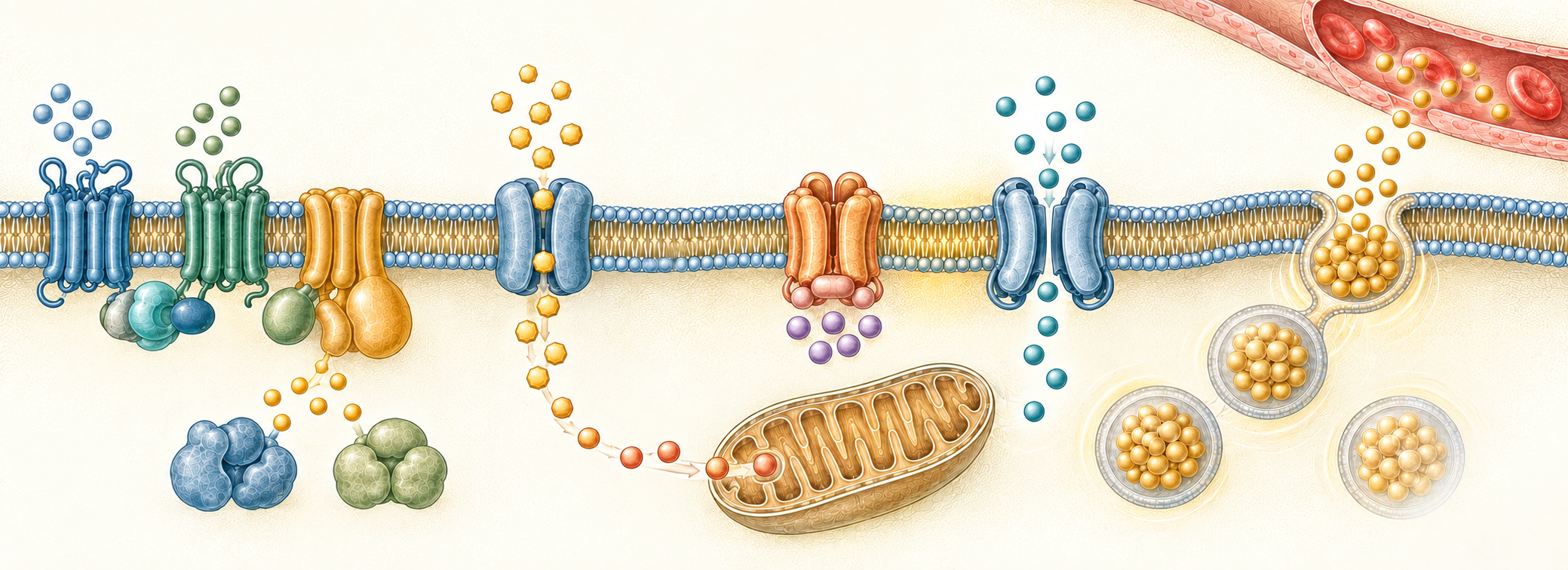
When glucose metabolism raises the ATP:ADP ratio, ATP-sensitive potassium channels close, the membrane depolarises and voltage-gated calcium channels open. Calcium entry triggers insulin-granule exocytosis. Tirzepatide binds GIP and GLP-1 receptors, raising cAMP through Gs and adenylyl cyclase; PKA and EPAC2 then amplify calcium entry, granule recruitment and fusion. The sequence is a concrete example of how receptor specificity and signal amplification create a cell response.
The important word is glucose-triggered. Tirzepatide strengthens insulin secretion when glucose provides the initiating signal; it is not simply forcing the beta cell to release insulin regardless of need. More appropriately timed insulin helps muscle and adipose tissue take up glucose and helps the liver reduce glucose output and store glycogen. Tirzepatide can also reduce inappropriately high glucagon during hyperglycaemia, removing another signal for hepatic glucose production. This gives the “better blood-glucose control” part of my reset argument a specific cellular mechanism rather than leaving it as a slogan.
An unexpected result: my irritable bowel became quieter
Tirzepatide dramatically reduced my irritable-bowel symptoms. I did not begin taking it as an IBS treatment, and the improvement was unexpected, but it has been an important part of my experience. The biology is plausible without being settled, and it is more interesting than saying only that the medicine “slows digestion”.
Tirzepatide delays gastric emptying. The effect is strongest after the first dose and generally becomes smaller with repeated dosing, so “the stomach is permanently slowed” is not an accurate explanation. Gastric emptying is also not the same as movement through the entire intestine. A more plausible pathway runs through GLP-1 receptors on myenteric neurons. Human motility experiments found that GLP-1 inhibited post-meal movement through neural, nitric-oxide and cAMP-dependent signalling rather than acting directly on intestinal muscle. Changing the timing and strength of intestinal contractions could, in principle, reduce urgency or pain in a person whose symptoms involve exaggerated motility or visceral signalling.
There is a small clinical clue in the same direction. A randomised trial of ROSE-010—a different, short-acting GLP-1 analogue—found acute pain relief in some people with IBS. In that 166-person single-dose crossover trial, 23–24% met the acute-pain-response threshold, compared with 12% after placebo. That does not prove the same effect for tirzepatide, but it shows that an incretin-related effect on IBS pain is not biologically absurd.
There are also ordinary indirect explanations. I ate smaller meals, had fewer cravings and changed what and when I consumed; any of those changes can alter IBS symptoms. Expectation, stress and natural variation may contribute too. Most importantly, other people experience the opposite: nausea, diarrhoea, constipation, vomiting and abdominal discomfort are well-recognised adverse effects. So this is not an argument that tirzepatide treats IBS. My experience cannot establish causality, but it identifies plausible direct and indirect mechanisms that could be tested.
The effect may not stop at food: alcohol and reward
Alcohol is the clearest example of why the reward question matters. A 2023 study analysed about 68,250 Reddit posts and comments concerning GLP-1 or combined GIP/GLP-1 medicines. Among 1,580 alcohol-related text items, 71.7% described reduced craving, reduced drinking or unpleasant effects from alcohol. The researchers then surveyed 153 current drinkers with obesity, including 50 taking tirzepatide. The tirzepatide group reported fewer drinks and lower odds of binge drinking than people taking neither medicine, as well as a reduction compared with their own recollection of drinking before treatment.
That was not a randomised trial, and memory and self-selection can distort the result. A 2026 clinical report adds three tirzepatide-specific cases: three people with type 2 diabetes, obesity and alcohol-associated liver disease reported substantial reductions in alcohol intake after starting the medicine. Three uncontrolled cases cannot establish a treatment effect. They move the story one small step beyond internet anecdote, but no further.
There is a plausible biological route. Food reward, alcohol reward and habit are not identical, but they overlap in mesolimbic circuitry involving the nucleus accumbens. A 2026 animal study found that tirzepatide reduced alcohol intake, relapse-like behaviour and alcohol-triggered dopamine release in that region. If an alcohol cue produces a smaller reward prediction or a weaker dopamine response, the learned behaviour has less reinforcement behind it. That is the strongest version of the reward argument.
It is not the only version. Slower gastric emptying, earlier fullness, unpleasant gastrointestinal effects, fewer social calories and the motivation created by weight loss could all reduce drinking without a direct change in alcohol reward. The human evidence cannot yet separate those pathways. It supports a real question, not one neat “addiction switch” and not a treatment claim. Randomised tirzepatide trials in people are underway, but results are not yet available.
When food stopped interrupting me, work became easier
My energy became remarkably even. I no longer experienced the same peaks, dips and need for a caffeine lift. I could focus for longer at work, be more efficient and effective in what I was doing and then, importantly, stop working and be present with my family. That was a practical change in my day.
It made me wonder about people who regularly find their attention pulled away from what they want to do. Could a medicine that quietens food preoccupation also free some of the brain’s limited attentional capacity? There is a plausible route, but not yet a settled answer.
I cannot assign my experience to one pathway. Food stopped interrupting me, my energy felt steadier, training became easier and I needed less caffeine. Better control of post-meal glucose could contribute in somebody with insulin resistance or dysglycaemia, while more regular intake could reduce perceived peaks and dips even without abnormal glucose. I did not measure my glucose continuously, so I cannot use that pathway as the explanation for me. Several smaller effects may simply have added up. That is worth studying properly, especially in people who struggle with attention in everyday life, but the honest claim is narrower: tirzepatide improved my focus and my work while current research gives us several credible mechanisms rather than one confirmed cognitive effect.
What people report online is more varied than the headlines
These are screenshots of other people’s public Reddit comments. I cropped usernames and avatars, kept the comments in Reddit’s own presentation and linked each image to its original context. The point is to show variation, not to turn the most dramatic comments into medical evidence.
Figure 2 · Public self-reports
The same medicine. Very different experiences.
Each pair includes a positive report and a contrary one deliberately.
Alcohol
Tirzepatide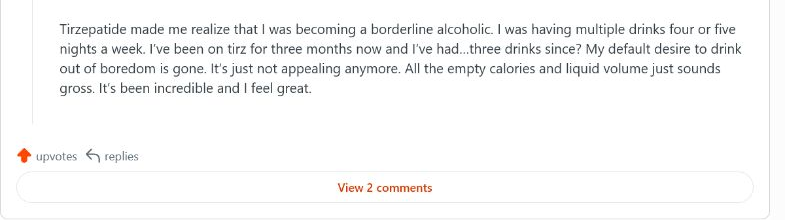
Tirzepatide made me realize that I was becoming a borderline alcoholic. I was having multiple drinks four or five nights a week. I’ve been on tirz for three months now and I’ve had…three drinks since? My default desire to drink out of boredom is gone. It’s just not appealing anymore. All the empty calories and liquid volume just sounds gross. It’s been incredible and I feel great.Reported reductionOpen on Reddit ↗

It dulled my need initially, but made it worse over time.Contrary reportOpen on Reddit ↗
Focus and work
Zepbound / tirzepatide

Gut symptoms
Zepbound / tirzepatide
Started Zepbound mid January of this year and almost immediately my poop issues went away. No diarrhea, no urgency, no missing a few days of pooping. It’s amazing! I know there are no miracles in science, but this really feels like a miracle drug. Such an unexpected but very welcome side effect.Reported improvementOpen on Reddit ↗
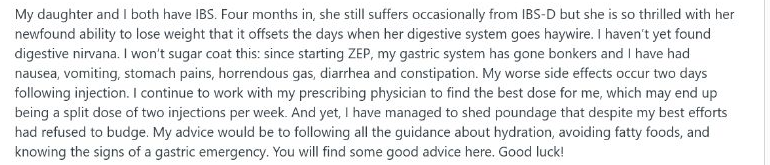
My daughter and I both have IBS. Four months in, she still suffers occasionally from IBS-D but she is so thrilled with her newfound ability to lose weight that it offsets the days when her digestive system goes haywire. I haven’t yet found digestive nirvana. I won’t sugar coat this: since starting ZEP, my gastric system has gone bonkers and I have had nausea, vomiting, stomach pains, horrendous gas, diarrhea and constipation. My worse side effects occur two days following injection. I continue to work with my prescribing physician to find the best dose for me, which may end up being a split dose of two injections per week. And yet, I have managed to shed poundage that despite my best efforts had refused to budge. My advice would be to following all the guidance about hydration, avoiding fatty foods, and knowing the signs of a gastric emergency. You will find some good advice here. Good luck!Contrary reportOpen on Reddit ↗
I became stronger while losing fat
This is where my experience differs from the story people sometimes expect. I was not starting from a life without exercise or a diet made entirely of poor choices. I was relatively healthy, overweight and already active. While taking tirzepatide, I lost fat, my cardio improved, I became stronger, and I began doing wrestling and boxing classes several times per week.
I do not have serial DXA scans proving that every gram of skeletal muscle was preserved. What I can say is that I saw no sign of functional muscle loss: I did not become frail or less capable. By my own observation, I became functionally more capable in the things I was asking my body to do. That does not prove tirzepatide built muscle; the training did real work. It does show why “weight loss” on its own is a poor description of the outcome.
There is a straightforward mechanism for the apparent paradox. Losing non-contractile mass reduces the load carried through every run, drill and change of direction, so movement can become cheaper before absolute strength changes at all. That can increase training volume and quality. Wrestling, boxing and other repeated training then provide the mechanical tension and neural practice that build strength. Better insulin sensitivity may improve delivery and use of glucose by working muscle, but tirzepatide is not established as an anabolic drug. The medicine may have made the training loop easier to enter; the training supplied the direct stimulus.
The best tirzepatide body-composition evidence comes from a SURMOUNT-1 substudy with paired DXA scans from 160 participants. The analysis pooled tirzepatide doses; about 75% of the weight lost was fat mass and 25% lean tissue in both the tirzepatide and placebo groups. Lean mass is not synonymous with skeletal muscle, and the study did not measure strength. The result supports preferential fat loss, not a unique muscle-sparing effect or proof that no muscle was lost. It is still a reason to take protein, resistance training and physical function seriously.
The major trials do not quite answer my question
It is tempting to say that tirzepatide trials studied only people with “severe obesity”, but that is not correct. SURMOUNT-1 included adults with a BMI of at least 30, or at least 27 plus a weight-related complication. Even so, the average starting BMI was 38, about 32% had a BMI of at least 40, and only about 5.5% began below a BMI of 30. The evidence is therefore much stronger for obesity than for active, relatively healthy people who are only moderately overweight.
SURMOUNT-1 followed 2,539 adults without diabetes for 72 weeks. Mean body-mass changes were −15.0%, −19.5% and −20.9% with tirzepatide 5 mg, 10 mg and 15 mg, compared with −3.1% with placebo. Every group also received a reduced-calorie diet and physical-activity counselling.
Figure 3 · SURMOUNT-1 · Week 72
Mean change in body mass
The chart shows a large average effect. It does not tell us whether a particular active person will lose fat while gaining strength, how training quality changes, or why one person feels liberated while another mainly feels nauseous. Those are not objections to the trial. They are the next questions.
My argument for a metabolic reset
My argument was never simply that I ate less and therefore felt better. It was that several connected parts of metabolism appeared to move into a different operating state: control of blood glucose, responsiveness to insulin, the use of lipid as fuel, and the amount of fat stored in and around metabolically important organs. If “reset” means a coordinated functional recalibration, there is a serious case for the word. If it means a permanent molecular return to youth after the medicine is stopped, the evidence is not there. I did not have serial insulin clamps, metabolic-chamber measurements or liver-fat scans; the case joins my observed changes to mechanisms demonstrated in human studies rather than pretending that I measured each one in myself.
The glucose side of the argument is stronger than the old version of this article allowed. A post-hoc analysis within the 2,539-participant SURMOUNT-1 trial—adults with overweight or obesity but not diabetes—found improvements in modelled insulin sensitivity and beta-cell function among participants with evaluable data after 72 weeks. Insulin-sensitivity gains were strongly associated with weight loss. One of the two modelled indices also suggested a possible contribution from treatment independent of weight loss, while the other did not. The beta-cell measures were associated with treatment rather than the amount of weight lost. A smaller 28-week clamp study in people with type 2 diabetes also found better insulin sensitivity, insulin secretion relative to sensitivity, glucose excursions and glucagon control. That second study cannot be transferred directly to a relatively healthy person, but it confirms that the drug can act on the mechanisms in question.
The lipid side is also concrete. In a small 18-week phase 1 study of 55 adults with obesity, with both groups under calorie restriction, tirzepatide shifted whole-body fuel use towards fat while weight was falling. Researchers did not detect an effect on energy expenditure beyond what body composition predicted. This is an on-treatment substrate-use state, not proof of a direct, weight-independent “fat-burning” action or permanently altered lipid metabolism. In the SURMOUNT-1 DXA substudy, roughly three quarters of the weight lost was fat mass.
SURPASS-3 MRI adds evidence about location. In that open-label substudy, participants had type 2 diabetes and a fatty-liver index of at least 60. Mean liver fat fell by 8.09 percentage points with pooled 10 mg and 15 mg tirzepatide, compared with 3.38 points on insulin degludec; visceral and subcutaneous abdominal fat also fell, and the liver-fat reduction correlated partly with weight loss. That population differed materially from me: participants had type 2 diabetes and a fatty-liver index of at least 60. The comparator was insulin rather than placebo, and the result does not prove a weight-independent effect. It does show that tirzepatide can reduce lipid held in the liver and abdominal fat depots in a clinically relevant population, not merely the number displayed by a scale.
These mechanistic studies and analyses were sponsored by Eli Lilly, and several authors were company employees or shareholders. That does not cancel randomisation, imaging or metabolic measurements, but it is part of the evidence and a reason independent replication matters.
Put those findings together and a plausible feedback loop appears. Excess lipid in liver and visceral tissue is associated with impaired insulin signalling and greater delivery of fatty acids to the liver. Reducing those stores can improve hepatic and whole-body insulin action. Better insulin action improves control of glucose; lower body mass makes movement cheaper; training increases the capacity of skeletal muscle to use glucose and lipid. That is the sense in which the resulting physiology can look “more youthful”: greater fat oxidation under the study conditions, less ectopic fat, better glucose regulation and more physical capacity. It is a comparison of function, not a claim that my cells became biologically younger.
The strongest objection is not that metabolism fails to change, but that “reset” is a metaphor. These studies did not measure a master metabolic set point, and the withdrawal data argue against permanence. The 2025 chamber study found no measurable prevention of human metabolic adaptation—the fall in energy expenditure that can accompany weight loss—despite the increase in fat oxidation. Withdrawal studies also show substantial regain. In SURMOUNT-4, body weight rose by 14.0% from the week-36 withdrawal point among participants switched to placebo, although they remained 9.9% below their original baseline after a year. In SURMOUNT-MAINTAIN, changes from week 60 to week 112 were −0.2% for those maintained on their maximum tolerated dose, +7.0% after reduction to 5 mg and +15.2% after switching to placebo. These are body-weight outcomes, not direct measurements of post-withdrawal fat oxidation or insulin sensitivity.
Some gains may outlast a prescription: fitness, strength, learned routines and a changed food environment do not vanish at the same moment as receptor stimulation. But the trials do not yet tell us how much of that acquired capacity offsets the biological pressures that may return after withdrawal. My conclusion is therefore conditional but still affirmative: “metabolic reset” is a defensible description of the coordinated state I experienced. It should not be sold as a permanent cure or a new metabolic set point.
Could tirzepatide help me live longer?
I am interested in that possibility, but “longevity” bundles together three different questions. Does a medicine reduce diseases that shorten life? Does it preserve the function that makes a longer life worth having? And does it actually extend lifespan? Tirzepatide has encouraging evidence for the first question and some evidence relevant to physical function, but little direct evidence yet that it preserves strength or cognition. No completed human trial can answer the third.
The proposed route is not mystical. Better glucose control can reduce glycaemic stress; less visceral and liver fat can improve insulin sensitivity; lower body mass and blood pressure can reduce cardiovascular and mechanical load; treating obesity-related sleep apnoea can reduce intermittent hypoxia; and greater capacity for exercise can improve fitness independently. Those mechanisms could reduce specific causes of illness and death. They do not demonstrate that tirzepatide acts on a general ageing programme, and several of them may be mediated mainly by fat loss rather than by a unique anti-ageing action of the molecule.
Lowering important risks
Tirzepatide can reduce body fat, waist circumference, blood pressure and adverse glucose measures. Those changes improve established cardiometabolic risk markers, but do not by themselves demonstrate longer healthspan.
Fewer serious events in selected patients
In SUMMIT, people with heart failure with preserved ejection fraction and obesity had a lower risk of the composite of cardiovascular death or worsening heart failure. The difference came from fewer worsening-heart-failure events, not a demonstrated reduction in cardiovascular deaths.
Longer human lifespan
No completed randomised trial shows that tirzepatide extends life in healthy or relatively healthy people. A better risk profile is not automatically proof of slower ageing.
The cardiovascular evidence needs exact language. In SUMMIT, 731 people already had heart failure with preserved ejection fraction and obesity; tirzepatide reduced the combined outcome of cardiovascular death or worsening heart failure compared with placebo. In SURPASS-CVOT, more than 13,000 people with type 2 diabetes and established cardiovascular disease had a slightly lower rate of cardiovascular death, heart attack or stroke with tirzepatide than with dulaglutide. Tirzepatide proved non-inferior, but not statistically superior, to an active GLP-1 medicine previously shown to reduce cardiovascular events.
Two ongoing trials should make this discussion much more concrete. SURMOUNT-MMO has enrolled 15,374 adults with overweight or obesity and elevated cardiovascular risk and is following death and major cardiovascular events, with completion expected in 2027. The much smaller Moody Longevity Trial is recruiting 90 adults aged 55–70 with overweight or obesity to measure DNA methylation “clocks”, physical function, inflammation and neurocognitive biomarker profiles. That is genuinely exciting, but moving an ageing biomarker is not the same as proving that people live longer.
For me, the most persuasive result at present is practical rather than futuristic: I am leaner, stronger, fitter and exercising at a higher intensity. Those are meaningful changes in my present health and function; they are not proof that my healthspan has lengthened. Whether tirzepatide itself slows biological ageing remains an open question, and it will have to earn that claim through long follow-up, not through the enthusiasm of people like me.
The benefits do not make the risks disappear
My experience has been outstanding, but the biology is not selective enough to guarantee a pleasant response. Current New Zealand product information lists nausea, diarrhoea, constipation, vomiting, indigestion and abdominal pain among the common gastrointestinal effects. Delayed gastric emptying can matter before anaesthesia or deep sedation and can alter the timing of absorption of some oral medicines.
The data sheet also addresses pancreatitis, gallbladder disease, severe gastrointestinal disease, dehydration and kidney injury, allergic reactions, interactions with insulin or insulin-stimulating medicines, pregnancy, oral-contraceptive reliability after starting or increasing a dose, and diabetic retinopathy. Postmarketing reports include intestinal obstruction or ileus, severe allergic reactions and non-arteritic anterior ischaemic optic neuropathy, which can cause sudden and potentially permanent vision loss. The sheet also advises monitoring for new or worsening depression, suicidal thoughts or unusual changes in mood or behaviour. Severe or persistent symptoms, or sudden loss of vision, need urgent medical attention.
The current data sheet also warns about malnutrition, including protein and vitamin or mineral deficiency, which can sometimes be severe. The clinical team should know about tirzepatide before a procedure involving anaesthesia or sedation. This is not a complete list: current product information and individual medical advice matter.
What I think tirzepatide actually gave me
Tirzepatide did not do the exercise for me, choose the food for me or organise my day. It changed the effort attached to those choices. Once cravings stopped occupying so much attention and my energy became more even, I had more capacity to train, work, relax and be present with my family. That is why “appetite suppressant” feels far too small as a description of my experience.
The biology does not reduce that experience to a trick. It makes it more interesting. A modified peptide binds to particular receptors; second messengers amplify glucose-dependent insulin secretion; glucagon, insulin sensitivity and nutrient handling can change in studied populations; lipid can be used as fuel and metabolically disruptive fat stores can shrink; appetite shifts and reward may shift; behaviour changes; and those behavioural changes feed back into the physiology of the whole body. Research shows that these variables can change; together they offer plausible contributors to the state I experienced. What felt like a reset is consistent with a genuine on-treatment shift in fuel use and glucose–insulin physiology; in my case, those pathways are plausible contributors rather than measured facts. “Reset” describes the operating state, not proven permanent reprogramming.
Optional exam practice
Two real exam formats. One piece of biology.
The pancreatic beta-cell mechanism earlier in this article can be tested in quite different ways. The first task follows the current four-point AP Biology conceptual-analysis pattern. The second follows the longer structured-data style of Cambridge International A Level Paper 4. Both questions, figures and mark schemes are original.
Question 4: Conceptual Analysis
Original AP-aligned practice · not an official College Board question
Figure 1 models glucose-triggered insulin secretion and the pathway by which tirzepatide amplifies secretion in a pancreatic beta cell. Arrows indicate that one event causes or activates the next.
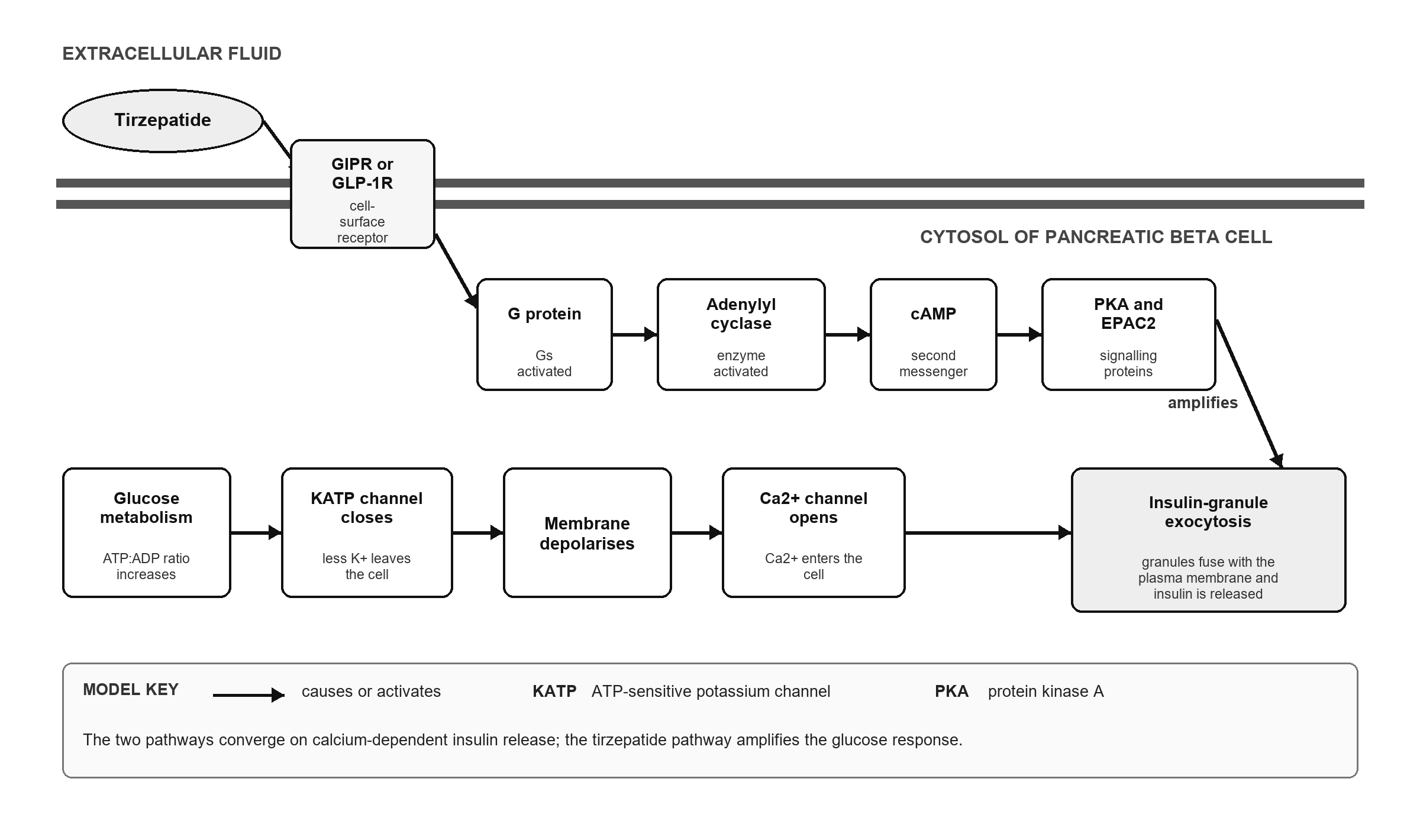
- Describe how the binding of an extracellular signaling molecule to a cell-surface receptor can initiate signal transduction inside a cell.
- Based on Figure 1, explain how closing the ATP-sensitive potassium channel causes the concentration of calcium ions in the beta cell to increase.
- Researchers add an adenylyl cyclase inhibitor to beta cells exposed to both high glucose and tirzepatide. Predict the effect of the inhibitor on insulin secretion compared with cells exposed to high glucose and tirzepatide without the inhibitor.
- Justify your prediction in part C.
Reveal AP model answer and scoring guidance4 points
Award one independent point for each part. Equivalent biologically accurate wording should receive credit.
- 1 point
Ligand binding changes the receptor’s conformation, activating an intracellular relay protein or enzyme and beginning a signal-transduction pathway.
- 1 point
Closing the channel reduces K+ movement out of the cell, depolarising the membrane; voltage-gated Ca2+ channels then open and Ca2+ enters the cell.
- 1 point
Insulin secretion will decrease.
- 1 point
Inhibiting adenylyl cyclase reduces cAMP production and therefore reduces PKA/EPAC2 amplification of insulin-granule exocytosis. The glucose-triggered pathway can remain active, so secretion is reduced rather than eliminated.
Paper 4-style structured question
Original A Level practice · Topic 14.1 · not an official Cambridge question
1 Researchers investigated the effect of tirzepatide on cell signalling in isolated pancreatic beta cells. At time 0, equal numbers of cells were exposed to a solution containing a high concentration of glucose. The cells were divided into two treatment groups:
- glucose only
- glucose and tirzepatide.
Fig. 1.1 shows the results.
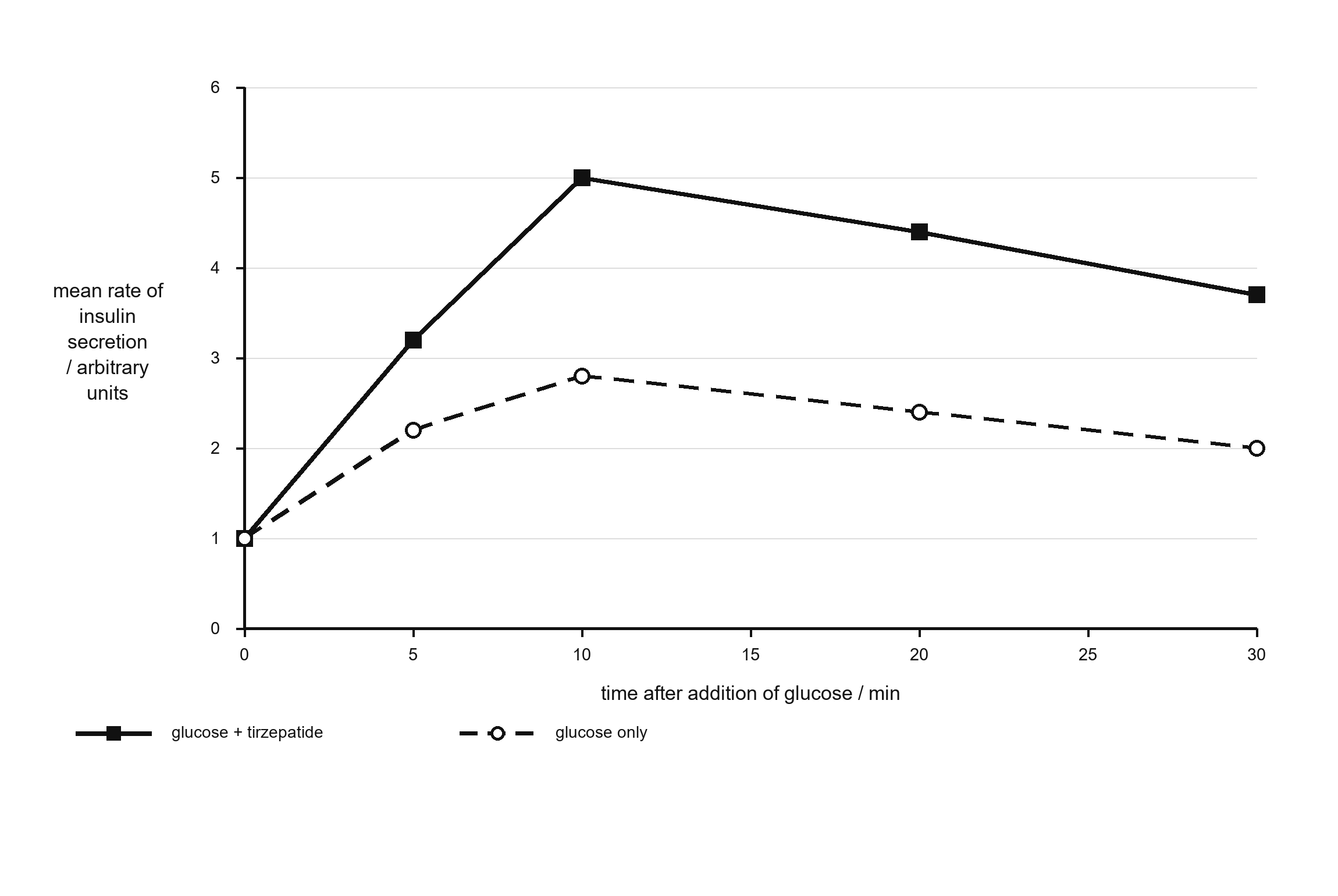
| Time / min | Glucose and tirzepatide | Glucose only |
|---|---|---|
| 0 | 1.0 | 1.0 |
| 5 | 3.2 | 2.2 |
| 10 | 5.0 | 2.8 |
| 20 | 4.4 | 2.4 |
| 30 | 3.7 | 2.0 |
- With reference to Fig. 1.1, describe the effect of tirzepatide on the mean rate of insulin secretion.[2]
- Calculate the percentage increase in the mean rate of insulin secretion at 10 minutes for cells exposed to glucose and tirzepatide compared with cells exposed to glucose only. Show your working.[2]
- Tirzepatide activates cell-surface receptors linked to G proteins. Explain how activation of these receptors leads to amplification of a signal inside the beta cell.[3]
- Explain how increased insulin secretion after a meal contributes to the negative feedback control of blood glucose concentration.[3]
[Total: 10]
Reveal Cambridge model answer and mark scheme10 marks
- 2 marks
Any two:
- tirzepatide causes a greater increase in secretion than glucose alone;
- the maximum occurs at 10 minutes: 5.0 units with tirzepatide compared with 2.8 units without;
- secretion decreases after 10 minutes but remains higher with tirzepatide at 30 minutes.
- 2 marks
((5.0 − 2.8) ÷ 2.8) × 100 = 78.6%, so 79%.
Award one mark for a correct method and one for the answer.
- 3 marks
- the activated G protein stimulates adenylyl cyclase;
- each active adenylyl cyclase can generate many cAMP molecules, amplifying the signal;
- cAMP activates PKA and EPAC2, which act on multiple downstream targets involved in insulin-granule exocytosis.
- 3 marks
- insulin increases glucose uptake by skeletal-muscle and adipose cells, including through greater GLUT4 insertion;
- insulin promotes glucose use and glycogen synthesis in liver or muscle;
- blood glucose concentration decreases towards the set point;
- the reduced blood glucose concentration reduces the stimulus for further insulin secretion.
Award any three.
Question architecture and scoring language were checked against released 2024–2025 AP Biology Question 4 materials and Cambridge Biology 9700 Paper 4 materials. The Cambridge task targets current A Level outcomes 14.1.9–10; blood-glucose homeostasis is not AS content.
Evidence and course links
I have prioritised primary studies, official course documents and the current New Zealand data sheet. Most pivotal tirzepatide trials and several mechanistic studies were funded by Eli Lilly. That does not erase their findings, but it matters when reading the evidence.
- Medsafe New Zealand: Mounjaro data sheet (revised September 2026)
- Willard et al. (2020): Dual GIP and GLP-1 receptor pharmacology of tirzepatide
- Urva et al. (2020): Tirzepatide and gastric emptying
- Ishihara (2022): Metabolism–secretion coupling in pancreatic beta cells
- Nagao, Lagerstedt & Eliasson (2022): cAMP-amplified insulin-granule exocytosis
- Martin et al. (2025): Tirzepatide, energy intake, appetite and food reward
- Ravussin et al. (2025): Fat oxidation and metabolic adaptation with tirzepatide
- Mari et al. (2025): Beta-cell function and insulin sensitivity in SURMOUNT-1
- Heise et al. (2022): Islet function, insulin sensitivity and glucagon in type 2 diabetes
- Gastaldelli et al. (2022): Liver fat and abdominal adipose tissue in SURPASS-3 MRI
- Quddos et al. (2023): Social-media and survey evidence on alcohol consumption
- Tirzepatide and reduced alcohol use in three clinical cases (2026)
- Tirzepatide and alcohol-related reward behaviour in rodents (2026)
- NIH phase 2 tirzepatide trial in alcohol use disorder (NCT07046819)
- NIH phase 1b tirzepatide alcohol- and food-cue study (NCT07559500)
- Hellström et al. (2009): ROSE-010 and acute pain in irritable bowel syndrome
- Halim et al. (2018): GLP-1, enteric neurons and human intestinal motility
- Jastreboff et al. (2022): SURMOUNT-1
- Aronne et al. (2024): Continuing or withdrawing tirzepatide in SURMOUNT-4
- SURMOUNT-MAINTAIN (2026): Dose reduction, continuation or withdrawal
- Look et al. (2025): SURMOUNT-1 body-composition substudy
- SURMOUNT-4 exit interviews (2025): Participants’ accounts of energy and function
- SURMOUNT-OSA patient-reported sleep and daytime-function outcomes (2025)
- Packer et al. (2025): Tirzepatide in obesity-related heart failure (SUMMIT)
- Nicholls et al. (2025): Cardiovascular outcomes in SURPASS-CVOT
- SURMOUNT-MMO: Ongoing morbidity and mortality trial (NCT05556512)
- Moody Longevity Trial: Ongoing biological-age study (NCT07220473)
- AP Biology Course and Exam Description, effective Fall 2025
- College Board: 2025 AP Biology free-response questions
- College Board: 2025 AP Biology scoring guidelines
- Cambridge International AS & A Level Biology 9700 syllabus, 2025–2027
- Cambridge International: Biology 9700 Paper 4 specimen question paper
- Cambridge International: Biology 9700 Paper 4 specimen mark scheme