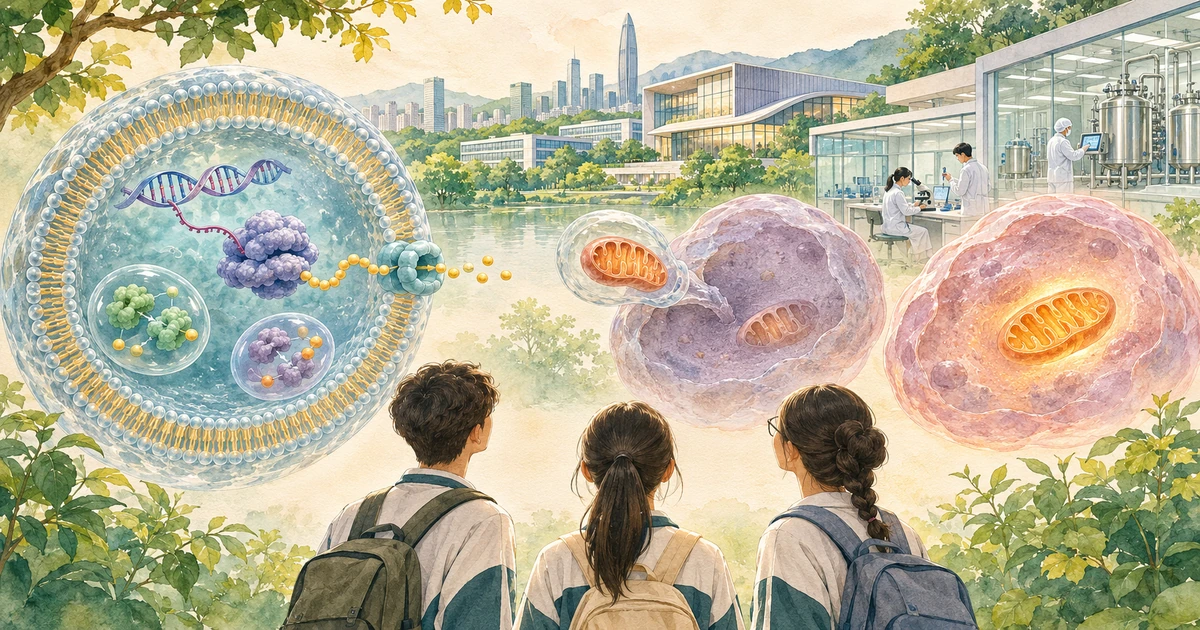
Imagine a student who can label a mitochondrion, explain chemiosmosis and describe the structure of a membrane, but cannot name one problem that knowledge might help solve—or one career built around it. I think we lose something important when Biology has no visible destination.
This article gives educators two examples which are ready to use: a human-made cell-like chamber and the possibility of treating a damaged cell with functional mitochondria. Each begins with familiar syllabus Biology, leads into active research in China, and can be opened with one image and one question in about five minutes.
I still need to teach the mechanism properly, with accurate vocabulary, causal explanations and examination practice. However, I also want students to see the larger story: people are using these mechanisms to build technologies, test possible therapies and respond to needs which will shape China and the rest of the world. A student cannot become interested in a career they have never heard of.
Watch Biology in context
Where could Biology take your students?
A concise visual introduction to human-made cell-like chambers, experimental mitochondrial transplantation and one five-minute question that brings the science, evidence and possible careers together.
English captions · Watch on YouTube
The classroom idea
One image. One genuine question. Five minutes.
This is not a complicated classroom routine. I put one strong image on the screen, give students a question worth thinking about, let them talk for two or three minutes, then reveal one verified finding and name one career connected to it. That is enough to plant a seed without taking over the lesson.
01
Membranes · gene expression · synthetic biology
Building a cell-like chamber from scratch
What scientists are trying to build
I would introduce these as human-made cell-like chambers. The phrase synthetic cell can suggest that scientists have already created a complete living cell. They have not. A more useful description for much of the current research is a human-made cell-like chamber. Researchers assemble micrometre-scale compartments from lipids, DNA, proteins or polymers, then give the chamber one or a few cellular jobs. It might make a protein, sense a change in its environment, open a pore, release a molecule or communicate with a living cell.
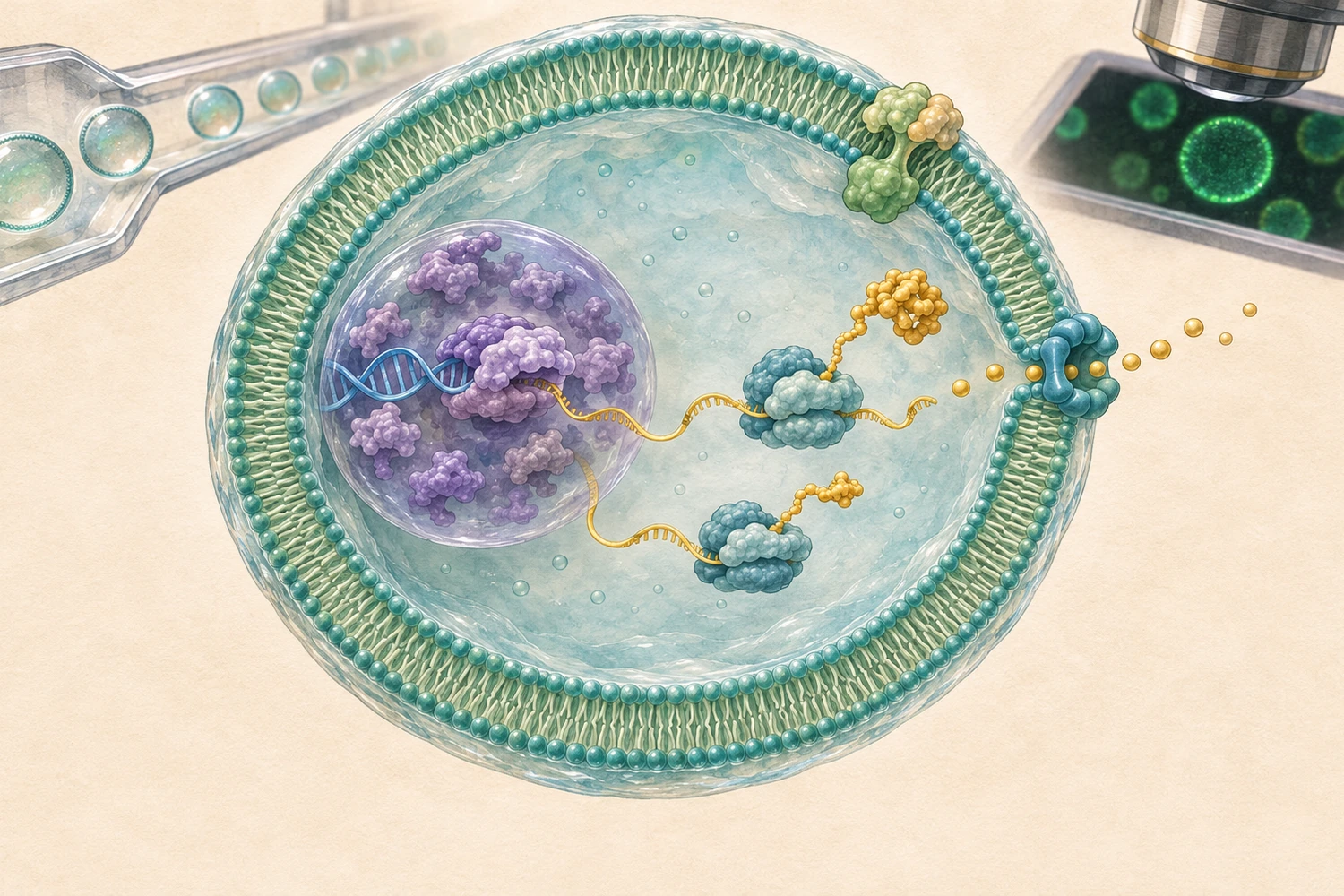
What I like about this example is that it makes school Biology experimental. Which molecules can cross the membrane? How can transcription and translation be separated but coordinated? Where does the energy come from? How long can the machinery keep working? Researchers use microfluidics to make tiny droplets and vesicles, fluorescence microscopy to watch molecules move, cell-free systems to express proteins, and mathematical models to find out why one design works while another leaks, stalls or breaks.
What has actually been achieved
What has already been demonstrated
Researchers can give a simple chamber a decision to make.
One 2025 study created nested, all-aqueous compartments. An inner protein-rich droplet concentrated the machinery for transcription; messenger RNA then carried information to an outer compartment where translation occurred. It is not a nucleus and cytoplasm in a living cell, but it shows why spatial organisation matters.
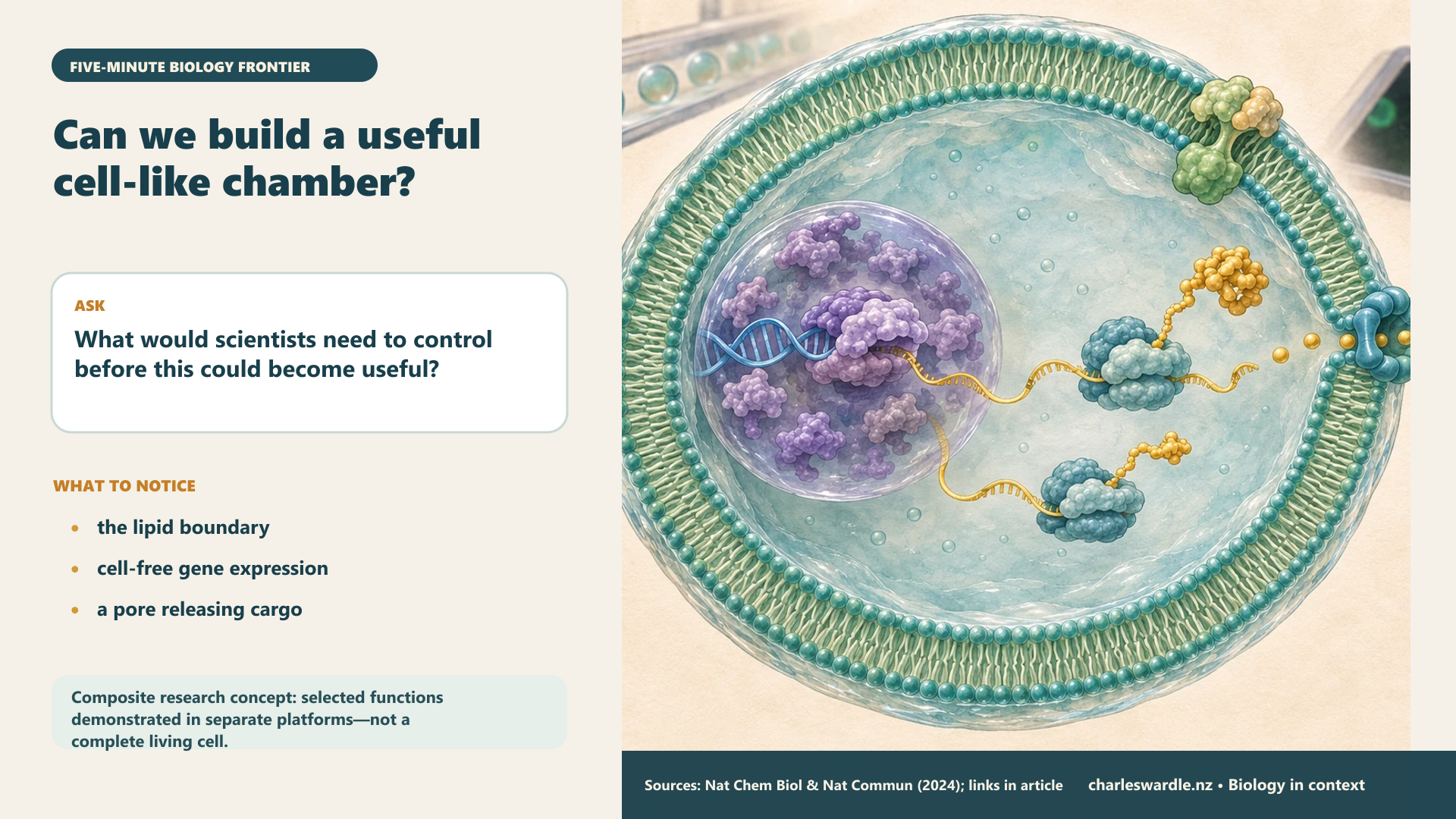
Another team enclosed DNA and cell-free protein-making machinery inside giant lipid vesicles. An RNA thermometer responded to a higher temperature, switched on protein synthesis and produced a membrane pore which released a small cargo. The result is a proof of principle: sense a condition, make a component, then change what crosses the boundary. Read the research.
What I find especially striking is the move towards communication. A China-affiliated team built responsive DNA artificial cells that exposed signalling molecules after light or ion stimulation and activated pathways in nearby mammalian cells. In a mouse muscle-injury model, the light-responsive system was associated with stronger regeneration markers and improved tissue repair. That is exciting preclinical evidence. It is not a treatment tested in people.
What still stands in the way
I can then ask students to look beyond the chamber itself. The possible destinations are remarkable: biosensors which produce a readable signal, programmable microreactors which make a protein where it is needed, targeted release systems, cell-free biomanufacturing and stripped-down models for asking what life actually requires. The hard part is integration. A chamber which can make one protein is not a cell which can obtain resources, remove waste, replace its ribosomes, copy every component, grow and divide repeatedly. Systems which work alone may interfere with one another when combined.
Where this work could lead
I would describe this as a live research direction in China, while keeping the scale of the claim clear. The Chinese Academy of Sciences launched an international synthetic-cell programme in Shenzhen, and a 2026 SynCell Asia roadmap set out a ten-year research agenda involving more than 100 scientists. Shenzhen’s broader synthetic-biology and biomanufacturing policies support fundamental research, enabling technologies, scale-up and specialised equipment. Those programmes do not mean that a complete synthetic cell—or a synthetic-cell therapy—is about to arrive. They do show where serious scientific attention, infrastructure and future work are growing. Explore the roadmap.
02
Respiration · cell repair · organelle therapy
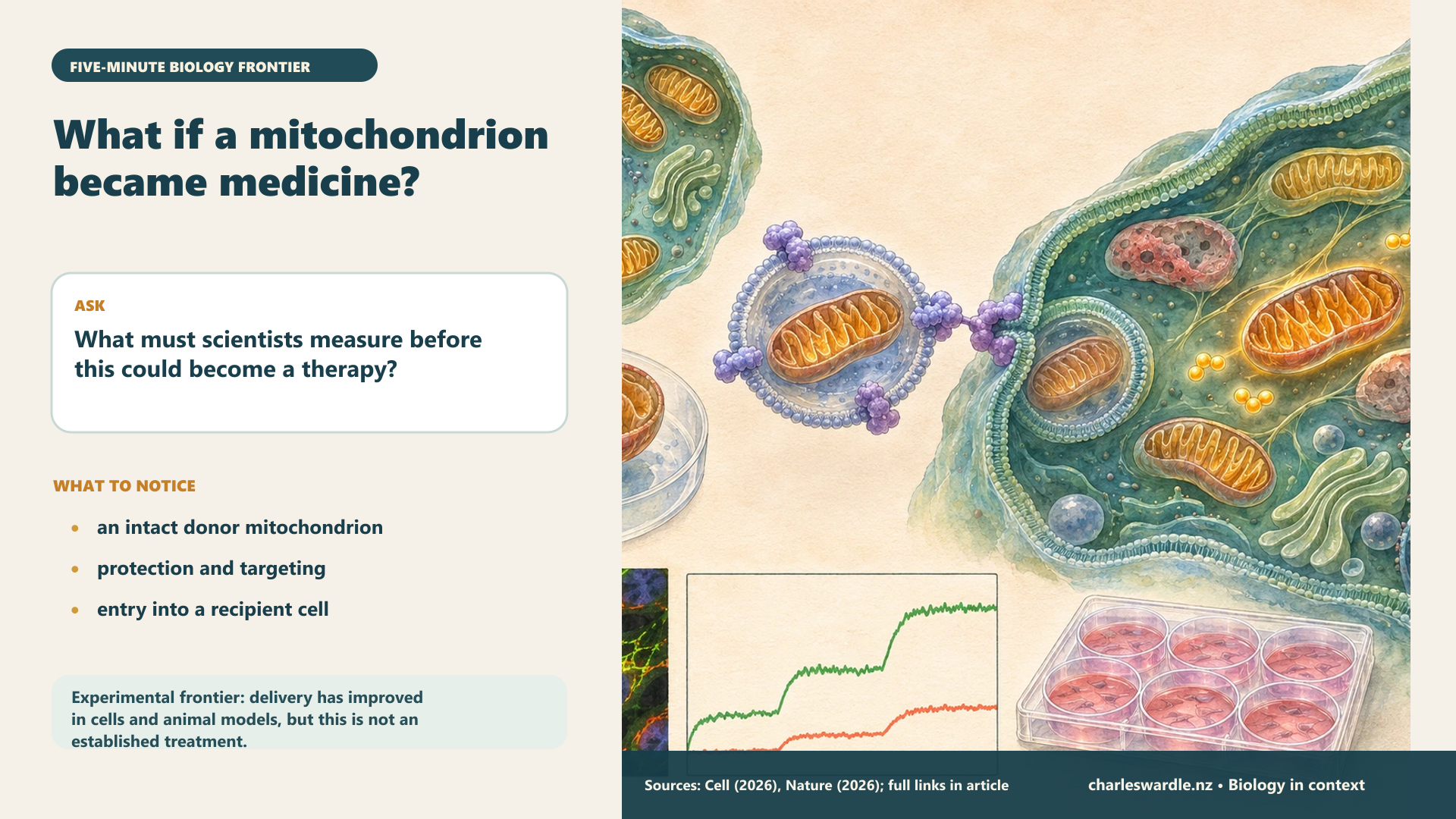
What if a mitochondrion became a medicine?
The possibility
I would begin organelle therapy with a simple but radical possibility: if damaged cells have failing mitochondria, could functional mitochondria be delivered to help restore cellular function? This is not the same as transplanting an organ, and it should not be confused with a drug that merely targets mitochondria. The proposed therapeutic material is the organelle itself.
The engineering problem
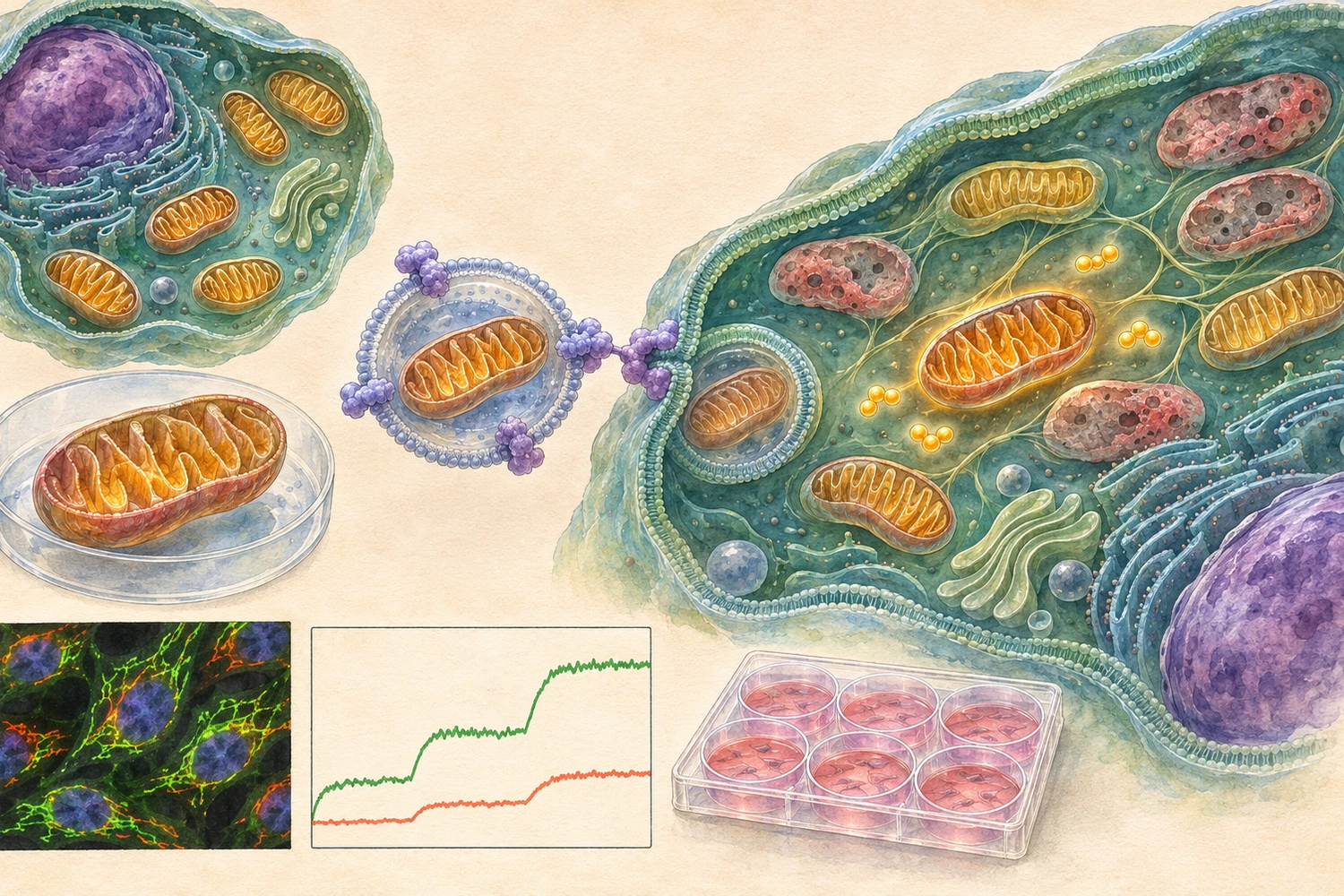
The research is far more demanding than placing one mitochondrion beside a cell. Scientists need to isolate intact organelles without destroying membrane potential, keep them active outside the donor cell, protect them during delivery, direct them towards damaged cells and prove that apparent uptake is real. They then measure oxygen consumption, ATP production, membrane potential, fusion and fission, mitophagy, mitochondrial DNA and the survival or function of the recipient cell.
What has actually been achieved
A fast-moving Chinese example
Wrapping mitochondria in a second membrane changed delivery.
In 2026, a Guangzhou-led team reported healthy mitochondria enclosed in red-blood-cell-membrane vesicles. In cultured cells, the institutional account reported uptake in roughly 80% of target cells, compared with less than 5% for naked mitochondria. The donor organelles entered cells and joined the recipient mitochondrial network. Read the paper record.
The team tested patient-derived cells with mitochondrial DNA defects and studied delivery in mice and monkeys. Benefits in disease were demonstrated in mouse models, including models of mitochondrial disease and neurodegeneration. That is a substantial research advance, but the boundary is essential: it is not yet evidence that mitochondrial capsules treat those diseases in patients.
What still stands in the way
Targeting is another major problem. The 2026 MitoCatch study used protein binders to link donor mitochondria with selected cell-surface proteins. Researchers directed mitochondria towards retinal cells, neurons, cardiac cells, endothelial cells and immune cells. The transplanted organelles improved respiration and short-term survival in damaged patient-derived neurons in culture and increased neuronal survival after injury in mice. Again, this is a platform and a preclinical result, not a proven human treatment.
Human evidence is at a much earlier stage. Small cardiac studies have shown that mitochondria can be isolated and delivered in critically ill patients, but the studies have been too small and too limited to establish efficacy. A registered Chinese study protocol describes a two-stage trial of autologous mitochondrial transplantation for severe limb ischaemia, beginning with safety and dose before preliminary efficacy. A registry entry establishes the planned study design, not current recruitment, progress or results. There are no mature results to justify a clinical claim.
I want students to see that the unanswered questions are exactly what make this a rich career pathway. Do donor mitochondria persist, fuse with the existing network or trigger the cell to repair its own system before being removed? How should a dose be defined? Could donor mitochondrial DNA and the recipient nuclear genome be incompatible? How can a batch be tested for sterility, membrane integrity and respiratory potency? Could the same transfer help a tumour or another cell we do not want to rescue? “More mitochondria” is not automatically better.
The curriculum opens outward
The connection can begin almost anywhere.
These frontier examples are not separate from the syllabus. Synthetic cell chambers begin with membranes, diffusion, protein synthesis, enzymes and gene regulation. Organelle therapy begins with mitochondrial structure, chemiosmosis, ATP, mitochondrial DNA and cell signalling. The more secure the underlying Biology is, the better the questions students can ask.
I have used the same principle in lessons on phloem, respiration and micro- and nanoplastics. I do not need to teach the whole research field. I need to show that the route exists.
Phloem
Heat, grain filling and food security
Ask: If heat reduces sucrose unloading into a developing grain, what happens to yield, and why?
Career: crop physiologist.
Respiration
Cells as factories
Ask: If more carbon is redirected towards a useful product, what might become limiting?
Career: metabolic engineer.
Microplastics
Pathway, exposure and evidence
Ask: If particles cross a wounded root but not an intact barrier, which tissue is the critical gateway?
Career: ecotoxicologist.
Why this is practical now
AI can reduce the preparation time without becoming the evidence.
A current example used to take longer to find than the classroom moment justified. AI can help me start with a syllabus statement, locate recent research, identify Chinese institutions and suggest related careers. I can then open the original paper or official source, check the mechanism, remove exaggeration and choose one image and one question.
That is why five minutes can be worth protecting. Most students will not pursue every connection. They do not need to. One student may remember that a membrane can be engineered; another may search for mitochondrial medicine; another may recognise a kind of work they did not know existed. A small moment can leave behind a searchable idea and a reason to learn more after class.
Use it tomorrow
Choose one frontier and project one slide.
Give students two or three minutes with the question before revealing the finding. The aim is not to cover the field. It is to let them use Biology they already know, then leave them with a research direction and a career they can search after the lesson.
I am developing this into a continuing Five-minute Biology frontiersseries: one current problem, one honest question and one possible future at a time. New entries will remain together in the writing archive as well as the video series.
Research and official sources
Synthetic-cell and organelle-therapy research is developing quickly. The article separates established laboratory or early clinical findings from possible future applications; none of the experimental therapies discussed here should be read as established medical care.
- Canning et al. (2018): utility value, performance and persistence in Biology
- Nature Communications: artificial cells with separated transcription and translation
- Nature Chemical Biology: temperature-responsive protein synthesis and cargo release
- Nature Communications: responsive DNA artificial cells and muscle regeneration in mice
- Nature Communications: international consensus on building synthetic cells
- Chinese Academy of Sciences: international synthetic-cell programme in Shenzhen
- Chinese Academy of Sciences: the 2026 SynCell Asia ten-year roadmap
- Shenzhen Municipal Government: 2026 support for synthetic biology and biomanufacturing
- Cell: red-blood-cell-membrane mitochondrial capsules from a Guangzhou-led team
- Chinese Academy of Sciences: explanation of mitochondrial-capsule research
- Nature: cell-type-targeted mitochondrial transplantation with MitoCatch
- Nature Communications: current methods and limits in mitochondrial transfer and transplantation
- Journal of Thoracic and Cardiovascular Surgery: paediatric cardiac mitochondrial transplantation
- Chinese Clinical Trial Registry: two-stage mitochondrial transplantation study for severe limb ischaemia
- Nature Metabolism: reporting standards for intercellular mitochondrial transfer